[ITEM]
29.02.2020
47

Bose Controlspace Esp-88 User Manual. Bose ControlSpace ESP-88 Service Manual by SRmanuals is scanned from original paperback copy of the Bose ControlSpace ESP-88 Service Manual and are guaranteed for high quality scans. We have tried utmost care to make sure completeness of manual. This is the one used by company people for their. View and Download Bose ControlSpace ESP-880 installation manual online. Fixed-I/O Engineered Sound Processors. ControlSpace ESP-880 Recording Equipment pdf manual download. Also for: Controlspace esp-1240, Controlspace esp-4120, Controlspace esp-1600. View online Safety instructions & install manual for Bose ControlSpace ESP-88 Recording Equipment or simply click Download button to examine the Bose ControlSpace ESP-88 guidelines offline on your desktop or laptop computer. Bose ControlSpace ESP-88 Manuals & User Guides. User Manuals, Guides and Specifications for your Bose ControlSpace ESP-88 Recording Equipment. Database contains 1 Bose ControlSpace ESP-88 Manuals (available for free online viewing or downloading in PDF): Safety instructions & install manual. ControlSpace® ESP-88 / ESP-00 engineered sound processor A SHEET All information subject to change without notice. ® 2013 Bose Corporation All trademarks are those of their respective owners. Bose Professional Systems Division 5 OF 6 pro.Bose.com Software Information Bose® ControlSpace® Designer™ software is used for the design. Bose controlspace esp-88 user manual.

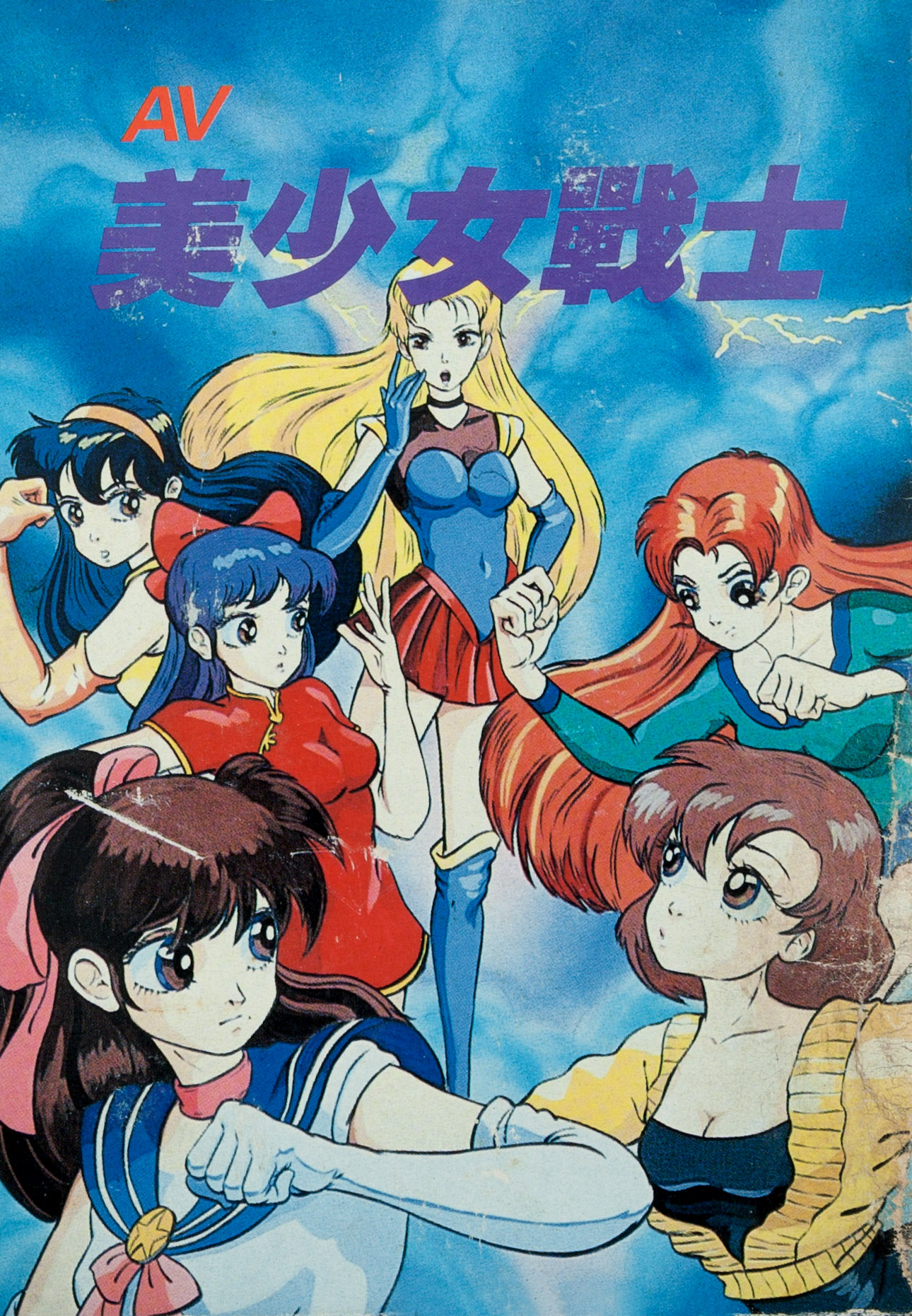
AV Bishōjo Senshi Girl Fighting (AV美少女戦士, sometimes known as AV Pretty Girl Fighting or AV Mei Shao Nǚ Zhan Shi) is a fighting game for the Famicom by Hummer Team.Compared to the other AV Famicom games, this one stands out since it's a fighting game rather than a card or mahjong game. ️👊 AV Bishoujo Senshi Girl Fighting 👊 ️. December 9, 2019 December 9, 2019 FlareEX Leave a comment. My first exposure to fighting games began with the initial purchase of my famiclone console. “Yie Ar Kung- Fu” was probably what introduced me to the genre, although I didn’t really thought about the game as much at that time.

SAILORVGAME

RETURN TO MAIN

NINTENDO ENTERTAINMENT SYSTEM

The Nintendo Entertainment System, or NES, is an 8-bit video game console released by Nintendo (its Japanese equivalent is known as Famicom). The most successful gaming console of its time in Asia and North America it set the standard for subsequent consoles in everything from game design to business practices. It was released in Japan on July 15, 1983. By the end of 1984 Famicom became the best-selling game console in Japan. In June 1985 Nintendo unveiled its American version of the Famicom.
For the rest of the decade, Nintendo was the undisputed master of the US and Japanese gaming markets, and its game titles were breaking sales records. Such games as Super Mario Bros., The Legend of Zelda, Final Fantasy, Castlevania series have set up standards for game genres. As the 1990s dawned, renewed competition from technologically superior systems such as the 16-bit Sega Genesis marked the end of the NES's dominance. By 1995 Nintendo of America officially discontinued the NES. Nintendo of Japan kept producing new Nintendo Famicoms up until October 2003, when Nintendo of Japan officially discontinued the line. This gave the NES an official lifespan of over two decades establishing it as one of the longest running game consoles.

The NES emulators: http://www.emulator-zone.com/doc.php/nes/

NAKAYOSHI TO ISSHO

Title: なかよしといっしょ
English Title: Together with Nakayoshi
Genre: RPG
Company: Yutaka
Release date: 1993
Platform: Nintendo Entertainment System

This is a RPG game, featuring several other characters from Nakayoshi magazine along with Sailor Moon characters. The game requires knowledge of Japanese language. Thus far I did not see a single walkthrough for it. It is one out of three games, belonging to 'Sailor Moon in Nakayoshi World' group.
'Nakayoshi' magazine editor asks you to save 6 worlds of different manga: 'Kingyou Chuihou'; 'Pocket Power'; 'MinMin!'; 'Taiou ni smash!'; 'Kurumi chan to shitinin no kobitotachi' and 'Bishoujo Senshi Sailor Moon' and their characters from a villain named Rakira(?) who had stolen from mangaka (manga creators) some pens, important for drawing manga. He had also done some other bad things..
During the game your character will be able to transform to 6 different characters, one for each manga world.
(thanks to Oksana Cherkashina for description and shots)

You can also download game videos with complete game walkthrough from the beginning to the end (files with flv-extensions can be played with regular Media Player Classic using any up-to date codec pack, like K-Lite).

Download the game (175 KB): sm_nes.zip

Game walkthrough videos, parts 1-5 (194 MB) nakayoshi_to_issho_1_5.zip
Game walkthrough videos, parts 6-12 (188 MB) nakayoshi_to_issho_6_12.zip

AV BISHOUJO SENSHI GIRL FIGHTING

Title: AV Bishoujo Senshi Girl Fighting (AV Mei Shao Nv Zhan Shi)
Genre: fighting
Company: n/a
Release date: 1994
Platform: Nintendo Entertainment System

This game seems to be a bootleg product, made from parts taken from other games. The country of origin presumably is China, the developer is unknown. Two Sailor Moon characters appear in the game - Sailor Mercury and Sailor Mars (their names are changed, though). Photo of game cartridge: 10_fc_av.jpg
Download the game (308 KB): nes_av_girl_fighting.zip
Kart Fighter
Developer(s)Hummer Team
Publisher(s)Ge De Industry Co.
Platform(s)Famicom
Release1993
Genre(s)Fighting
Mode(s)Single-player, multiplayer

Kart Fighter (Chinese: 瑪莉快打; pinyin: Mǎ lì kuài dǎ, 'Mario Fighter') is an unlicensed2Dfighting game produced for the Nintendo Famicom by Taiwanese studio Hummer Team. The game features unauthorized appearances by Nintendo's mascot Mario and the rest of the cast of Super Mario Kart in a port of Street Fighter II. Kart Fighter has received some media attention, including mostly positive reviews, in part because of its perceived similarity to the later Super Smash Bros. series.

  • 1Gameplay

Gameplay[edit]

Yossy (Yoshi) fights a miniskirt-wearing Princess Peach.

Kart Fighter follows many of the rules and conventions already established for the fighting game genre by the time of its release. The player engages opponents in one-on-one close quarter combat. The object of each round is to deplete the opponent's vitality before the timer runs out. Because it is an adaptation of Street Fighter II,[1][2] the game controls resemble those of the Street Fighter series. The player uses the D-pad to move the character towards or away from the opponent or to jump. The A and B buttons perform punches and kicks, as well as jump punches and jump kicks when combined with movement. Additionally, each character has a selection of special moves performed by inputting a combination of directional and button-based commands. Unlike Street Fighter II, nearly all characters have some form of projectile attack available as a special move,[1] but the blocking system is more limited.[3]

Five difficulty levels are available for solo play.[4] A second player can also select a character, allowing for two-player matches. However, because no indication of this feature appears in game,[3] it can be easily overlooked.[5]

Characters[edit]

All eight playable characters from Super Mario Kart appear in Kart Fighter, although several have been renamed or are Japanese versions of names– Mari (Mario), Luigi, Peach (Princess Toadstool), Yossy (Yoshi), Kupa (Bowser), Donkey (Donkey Kong Jr.), Nokonoko (Koopa Troopa), and Kinopio (Toad).[1][6] Many of the characters' appearances are closely adapted from Super Mario Kart sprites, although they are not to scale. However, Donkey Kong Jr. has a substantially different appearance and Princess Peach appears in a miniskirt and boots.[3][7]

Development[edit]

During the 1980s and 1990s, production of pirateFamicom games in East Asia was commonplace, aided by the Famicom's absence of the 10NESlockout chip included in North American versions of the Nintendo Entertainment System.[8] The commercial success of Street Fighter II made it a particularly frequent choice for unauthorized ports and adaptations.[2]Kart Fighter was one such game, developed by a team known as Hummer Team or Gouder, and published by Hong Kong-based Ge De Industry, probably in 1993.[5][9]

Kart Fighter used character models from the 1992 Super FamicomSuper Mario Kart. The use of art from a 16-bit platform on the 8-bit Famicom presented technical challenges, because sprites on the less powerful console were limited to four colors. The Kart Fighter developers overcame this limitation by assembling the characters from several smaller sprites, which move together to give the appearance of a single object.[2] Art resources from other games were also pirated, including a stage background taken from Little Nemo: The Dream Master.[5]

The same development team responsible for Kart Fighter also created other unauthorized Street Fighter II adaptations. One such game was included on the 1998 Super HIK 4 in 1 12Mmulticart,[5] in which Mario appeared alongside characters from the Street Fighter franchise.[10] The developers also moddedKart Fighter itself to produce the Sailor Moon-themed AV Bishoujo Senshi Girl Fighting.[9][11]

Legacy[edit]

Several years after its release, Kart Fighter received critical attention for its similarities to the Super Smash Bros. series.[6] Reviews were generally positive, especially in the context of fighting games on the NES[1] or unauthorized NES games,[2] categories viewed as having typically poor quality. Reviews cited its originality,[2] music,[5] and relative lack of bugs,[3] with several considering it one of the best unauthorized games of its era,[5][7] meeting or exceeding the quality of similar licensed games such as TMNT: Tournament Fighters.[1][2]

However, Complex considered Kart Fighter the worst fighting game ever made.[12] Other reviewers remarked negatively on the screen flicker resulting from the game's sprite system,[2][3] poor AI,[3] missing menu options, and lack of a proper ending.[5]

See also[edit]

  • Somari, another unlicensed Hummer Team game featuring Mario

References[edit]

  1. ^ abcdeFletcher, JC (2008-04-24). 'Virtually Overlooked: Kart Fighter'. Joystiq. Retrieved 2013-09-17.
  2. ^ abcdefgKohler, Chris (2003-08-01). 'Your Totally Unauthorized Guide to Pirate Famicom Fighters'. Insert Credit. Archived from the original on 2011-06-15. Retrieved 2013-09-17.
  3. ^ abcdefBowen, Kevin. 'Game of the Week: Kart Fighter & Strip Fighter II'. Classic Gaming. Archived from the original on 2013-09-21. Retrieved 2013-09-17.
  4. ^Day, Jeff. 'Rated 'Arrr!': Kart Fighter'. random.access. Archived from the original on 2013-09-21. Retrieved 2013-09-17.
  5. ^ abcdefgGifford, Kevin. 'Kart Fighter'. tsr's NES Archive. Retrieved 2013-09-17.
  6. ^ abYip, Spencer (2006-07-05). 'Before Super Smash Brothers there was Kart Fighter'. Siliconera. Retrieved 2013-09-17.
  7. ^ abGestal, Juan (2007-06-05). 'Los juegos de lucha piratas de la NES'. Pixfans (in Spanish). Retrieved 2013-09-17.
  8. ^Wolf, Mark J. P. (2007). The Video Game Explosion: A History from PONG to PlayStation and Beyond. Greenwood. pp. 111–112. ISBN978-0313338687.
  9. ^ ab'Kart Fighter'. Universal Videogame List. Retrieved 2013-09-17.
  10. ^Gifford, Kevin. '1998 Super HIK 4 in 1 12M'. tsr's NES Archive. Retrieved 2013-09-17.
  11. ^'AV Bishoujo Senshi Girl Fighting'. Universal Videogame List. Retrieved 2013-09-19.
  12. ^Knight, Rich (2011-12-22). 'The 10 Worst Fighting Games'. Complex. Retrieved 2013-09-19.


Pastest mrcpch part 1.

Retrieved from 'https://en.wikipedia.org/w/index.php?title=Kart_Fighter&oldid=917553333'
[/ITEM]
[/MAIN]
29.02.2020
59

Bose Controlspace Esp-88 User Manual. Bose ControlSpace ESP-88 Service Manual by SRmanuals is scanned from original paperback copy of the Bose ControlSpace ESP-88 Service Manual and are guaranteed for high quality scans. We have tried utmost care to make sure completeness of manual. This is the one used by company people for their. View and Download Bose ControlSpace ESP-880 installation manual online. Fixed-I/O Engineered Sound Processors. ControlSpace ESP-880 Recording Equipment pdf manual download. Also for: Controlspace esp-1240, Controlspace esp-4120, Controlspace esp-1600. View online Safety instructions & install manual for Bose ControlSpace ESP-88 Recording Equipment or simply click Download button to examine the Bose ControlSpace ESP-88 guidelines offline on your desktop or laptop computer. Bose ControlSpace ESP-88 Manuals & User Guides. User Manuals, Guides and Specifications for your Bose ControlSpace ESP-88 Recording Equipment. Database contains 1 Bose ControlSpace ESP-88 Manuals (available for free online viewing or downloading in PDF): Safety instructions & install manual. ControlSpace® ESP-88 / ESP-00 engineered sound processor A SHEET All information subject to change without notice. ® 2013 Bose Corporation All trademarks are those of their respective owners. Bose Professional Systems Division 5 OF 6 pro.Bose.com Software Information Bose® ControlSpace® Designer™ software is used for the design. Bose controlspace esp-88 user manual.

AV Bishōjo Senshi Girl Fighting (AV美少女戦士, sometimes known as AV Pretty Girl Fighting or AV Mei Shao Nǚ Zhan Shi) is a fighting game for the Famicom by Hummer Team.Compared to the other AV Famicom games, this one stands out since it's a fighting game rather than a card or mahjong game. ️👊 AV Bishoujo Senshi Girl Fighting 👊 ️. December 9, 2019 December 9, 2019 FlareEX Leave a comment. My first exposure to fighting games began with the initial purchase of my famiclone console. “Yie Ar Kung- Fu” was probably what introduced me to the genre, although I didn’t really thought about the game as much at that time.

SAILORVGAME

RETURN TO MAIN

NINTENDO ENTERTAINMENT SYSTEM

The Nintendo Entertainment System, or NES, is an 8-bit video game console released by Nintendo (its Japanese equivalent is known as Famicom). The most successful gaming console of its time in Asia and North America it set the standard for subsequent consoles in everything from game design to business practices. It was released in Japan on July 15, 1983. By the end of 1984 Famicom became the best-selling game console in Japan. In June 1985 Nintendo unveiled its American version of the Famicom.
For the rest of the decade, Nintendo was the undisputed master of the US and Japanese gaming markets, and its game titles were breaking sales records. Such games as Super Mario Bros., The Legend of Zelda, Final Fantasy, Castlevania series have set up standards for game genres. As the 1990s dawned, renewed competition from technologically superior systems such as the 16-bit Sega Genesis marked the end of the NES's dominance. By 1995 Nintendo of America officially discontinued the NES. Nintendo of Japan kept producing new Nintendo Famicoms up until October 2003, when Nintendo of Japan officially discontinued the line. This gave the NES an official lifespan of over two decades establishing it as one of the longest running game consoles.

The NES emulators: http://www.emulator-zone.com/doc.php/nes/

NAKAYOSHI TO ISSHO

Title: なかよしといっしょ
English Title: Together with Nakayoshi
Genre: RPG
Company: Yutaka
Release date: 1993
Platform: Nintendo Entertainment System

This is a RPG game, featuring several other characters from Nakayoshi magazine along with Sailor Moon characters. The game requires knowledge of Japanese language. Thus far I did not see a single walkthrough for it. It is one out of three games, belonging to 'Sailor Moon in Nakayoshi World' group.
'Nakayoshi' magazine editor asks you to save 6 worlds of different manga: 'Kingyou Chuihou'; 'Pocket Power'; 'MinMin!'; 'Taiou ni smash!'; 'Kurumi chan to shitinin no kobitotachi' and 'Bishoujo Senshi Sailor Moon' and their characters from a villain named Rakira(?) who had stolen from mangaka (manga creators) some pens, important for drawing manga. He had also done some other bad things..
During the game your character will be able to transform to 6 different characters, one for each manga world.
(thanks to Oksana Cherkashina for description and shots)

You can also download game videos with complete game walkthrough from the beginning to the end (files with flv-extensions can be played with regular Media Player Classic using any up-to date codec pack, like K-Lite).

Download the game (175 KB): sm_nes.zip

Game walkthrough videos, parts 1-5 (194 MB) nakayoshi_to_issho_1_5.zip
Game walkthrough videos, parts 6-12 (188 MB) nakayoshi_to_issho_6_12.zip

AV BISHOUJO SENSHI GIRL FIGHTING

Title: AV Bishoujo Senshi Girl Fighting (AV Mei Shao Nv Zhan Shi)
Genre: fighting
Company: n/a
Release date: 1994
Platform: Nintendo Entertainment System

This game seems to be a bootleg product, made from parts taken from other games. The country of origin presumably is China, the developer is unknown. Two Sailor Moon characters appear in the game - Sailor Mercury and Sailor Mars (their names are changed, though). Photo of game cartridge: 10_fc_av.jpg
Download the game (308 KB): nes_av_girl_fighting.zip
Kart Fighter
Developer(s)Hummer Team
Publisher(s)Ge De Industry Co.
Platform(s)Famicom
Release1993
Genre(s)Fighting
Mode(s)Single-player, multiplayer

Kart Fighter (Chinese: 瑪莉快打; pinyin: Mǎ lì kuài dǎ, 'Mario Fighter') is an unlicensed2Dfighting game produced for the Nintendo Famicom by Taiwanese studio Hummer Team. The game features unauthorized appearances by Nintendo's mascot Mario and the rest of the cast of Super Mario Kart in a port of Street Fighter II. Kart Fighter has received some media attention, including mostly positive reviews, in part because of its perceived similarity to the later Super Smash Bros. series.

  • 1Gameplay

Gameplay[edit]

Yossy (Yoshi) fights a miniskirt-wearing Princess Peach.

Kart Fighter follows many of the rules and conventions already established for the fighting game genre by the time of its release. The player engages opponents in one-on-one close quarter combat. The object of each round is to deplete the opponent's vitality before the timer runs out. Because it is an adaptation of Street Fighter II,[1][2] the game controls resemble those of the Street Fighter series. The player uses the D-pad to move the character towards or away from the opponent or to jump. The A and B buttons perform punches and kicks, as well as jump punches and jump kicks when combined with movement. Additionally, each character has a selection of special moves performed by inputting a combination of directional and button-based commands. Unlike Street Fighter II, nearly all characters have some form of projectile attack available as a special move,[1] but the blocking system is more limited.[3]

Five difficulty levels are available for solo play.[4] A second player can also select a character, allowing for two-player matches. However, because no indication of this feature appears in game,[3] it can be easily overlooked.[5]

Characters[edit]

All eight playable characters from Super Mario Kart appear in Kart Fighter, although several have been renamed or are Japanese versions of names– Mari (Mario), Luigi, Peach (Princess Toadstool), Yossy (Yoshi), Kupa (Bowser), Donkey (Donkey Kong Jr.), Nokonoko (Koopa Troopa), and Kinopio (Toad).[1][6] Many of the characters' appearances are closely adapted from Super Mario Kart sprites, although they are not to scale. However, Donkey Kong Jr. has a substantially different appearance and Princess Peach appears in a miniskirt and boots.[3][7]

Development[edit]

During the 1980s and 1990s, production of pirateFamicom games in East Asia was commonplace, aided by the Famicom's absence of the 10NESlockout chip included in North American versions of the Nintendo Entertainment System.[8] The commercial success of Street Fighter II made it a particularly frequent choice for unauthorized ports and adaptations.[2]Kart Fighter was one such game, developed by a team known as Hummer Team or Gouder, and published by Hong Kong-based Ge De Industry, probably in 1993.[5][9]

Kart Fighter used character models from the 1992 Super FamicomSuper Mario Kart. The use of art from a 16-bit platform on the 8-bit Famicom presented technical challenges, because sprites on the less powerful console were limited to four colors. The Kart Fighter developers overcame this limitation by assembling the characters from several smaller sprites, which move together to give the appearance of a single object.[2] Art resources from other games were also pirated, including a stage background taken from Little Nemo: The Dream Master.[5]

The same development team responsible for Kart Fighter also created other unauthorized Street Fighter II adaptations. One such game was included on the 1998 Super HIK 4 in 1 12Mmulticart,[5] in which Mario appeared alongside characters from the Street Fighter franchise.[10] The developers also moddedKart Fighter itself to produce the Sailor Moon-themed AV Bishoujo Senshi Girl Fighting.[9][11]

Legacy[edit]

Several years after its release, Kart Fighter received critical attention for its similarities to the Super Smash Bros. series.[6] Reviews were generally positive, especially in the context of fighting games on the NES[1] or unauthorized NES games,[2] categories viewed as having typically poor quality. Reviews cited its originality,[2] music,[5] and relative lack of bugs,[3] with several considering it one of the best unauthorized games of its era,[5][7] meeting or exceeding the quality of similar licensed games such as TMNT: Tournament Fighters.[1][2]

However, Complex considered Kart Fighter the worst fighting game ever made.[12] Other reviewers remarked negatively on the screen flicker resulting from the game's sprite system,[2][3] poor AI,[3] missing menu options, and lack of a proper ending.[5]

See also[edit]

  • Somari, another unlicensed Hummer Team game featuring Mario

References[edit]

  1. ^ abcdeFletcher, JC (2008-04-24). 'Virtually Overlooked: Kart Fighter'. Joystiq. Retrieved 2013-09-17.
  2. ^ abcdefgKohler, Chris (2003-08-01). 'Your Totally Unauthorized Guide to Pirate Famicom Fighters'. Insert Credit. Archived from the original on 2011-06-15. Retrieved 2013-09-17.
  3. ^ abcdefBowen, Kevin. 'Game of the Week: Kart Fighter & Strip Fighter II'. Classic Gaming. Archived from the original on 2013-09-21. Retrieved 2013-09-17.
  4. ^Day, Jeff. 'Rated 'Arrr!': Kart Fighter'. random.access. Archived from the original on 2013-09-21. Retrieved 2013-09-17.
  5. ^ abcdefgGifford, Kevin. 'Kart Fighter'. tsr's NES Archive. Retrieved 2013-09-17.
  6. ^ abYip, Spencer (2006-07-05). 'Before Super Smash Brothers there was Kart Fighter'. Siliconera. Retrieved 2013-09-17.
  7. ^ abGestal, Juan (2007-06-05). 'Los juegos de lucha piratas de la NES'. Pixfans (in Spanish). Retrieved 2013-09-17.
  8. ^Wolf, Mark J. P. (2007). The Video Game Explosion: A History from PONG to PlayStation and Beyond. Greenwood. pp. 111–112. ISBN978-0313338687.
  9. ^ ab'Kart Fighter'. Universal Videogame List. Retrieved 2013-09-17.
  10. ^Gifford, Kevin. '1998 Super HIK 4 in 1 12M'. tsr's NES Archive. Retrieved 2013-09-17.
  11. ^'AV Bishoujo Senshi Girl Fighting'. Universal Videogame List. Retrieved 2013-09-19.
  12. ^Knight, Rich (2011-12-22). 'The 10 Worst Fighting Games'. Complex. Retrieved 2013-09-19.


Pastest mrcpch part 1.

Retrieved from 'https://en.wikipedia.org/w/index.php?title=Kart_Fighter&oldid=917553333'